 Hover to view full image
TA-011 · available
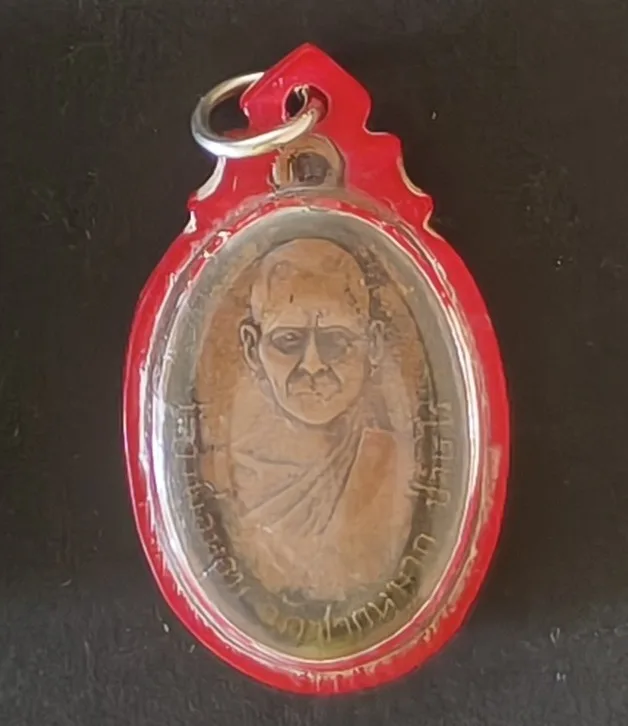
Luang Phor Daeng
Luang Phor Daeng of Wat Chao Fa Sala Loi in Chumphon Province is remembered as a respected Buddhist monk associated with the religious and amulet traditions of Southern Thailand. His name has become particularly familiar among Thai Buddhist devotees and collectors interested in Southern Thai sacred objects.
Wat Chao Fa Sala Loi is located in Chumphon Province and has an important place within the local Buddhist landscape. Luang Phor Daeng's religious legacy is closely associated with the temple and with the devotional traditions that developed around his teachings and spiritual practice.
Luang Phor Daeng amulets have been produced in different forms and materials. Because multiple editions and commemorative productions exist, an individual amulet should be identified according to its specific production year, mold, material, temple issue and documented provenance rather than simply being classified by the monk's name.
Depending on the edition, examples may be made from sacred metal, bronze, copper, sacred powder, or other consecrated materials. Different productions can display significant differences in Buddha imagery, inscriptions, dimensions, casting characteristics, surface texture and other physical details.
In Thai Buddhist amulet culture, sacred objects associated with respected monks are traditionally regarded as reminders of Buddhist teachings, spiritual practice and devotion. Luang Phor Daeng amulets are commonly associated by devotees with protection, safety, spiritual strength, good fortune and auspicious blessings.
Such spiritual associations should be understood within the context of religious faith and Thai cultural tradition. They should not be represented as scientifically established supernatural effects.
From a collecting perspective, Luang Phor Daeng amulets can be interesting examples of Southern Thai Buddhist sacred art. Collectors may examine the Buddha image or monk portrait, inscriptions, mold characteristics, material, dimensions, surface, production method, provenance and condition.
A particularly important consideration is the possibility of confusion between different monks named Luang Phor Daeng. The name is not unique, and other Thai monks have also been known by the name Luang Phor Daeng. Therefore, the temple and province should always be recorded alongside the monk's name when cataloguing an amulet.
For this reason, a database record should ideally specify Wat Chao Fa Sala Loi, Chumphon when referring to the Luang Phor Daeng associated with this particular tradition. If a specimen originates from another temple, it should be catalogued separately rather than automatically attributed to Wat Chao Fa Sala Loi.
The production year should also be treated carefully. Different generations and commemorative editions can have different dates, materials and characteristics. An amulet should therefore not be assigned a single historical year unless the specific edition has been established.
Collectors should also distinguish older temple issues from later reproductions and commemorative productions. Authentication should not rely solely on general appearance; reliable reference material, provenance, physical characteristics and expert assessment may all be relevant.
Today, Luang Phor Daeng of Wat Chao Fa Sala Loi remains a respected figure within the Buddhist and amulet traditions of Southern Thailand. His association with Wat Chao Fa Sala Loi and the continuing interest in his sacred objects contribute to the cultural and collecting significance of his amulets.
IMPORTANT PAYMENT NOTICE
By proceeding with payment, you acknowledge that your payment is final and non-refundable, except where a refund is expressly approved by us or required by applicable law.
Please review your offer, the Item details, rental conditions, applicable fees, and Terms & Conditions carefully before making payment.
By completing payment, you confirm that you have read and accepted our Terms & Conditions.
- Temple
- Wat Chao Fa Sala Loi
- Monk
- Luang Phor Daeng (Phra Kru Wiboon Thammasan)
- Material
- Sacred metal, bronze, copper, sacred powder, and other consecrated materials depending on the edition