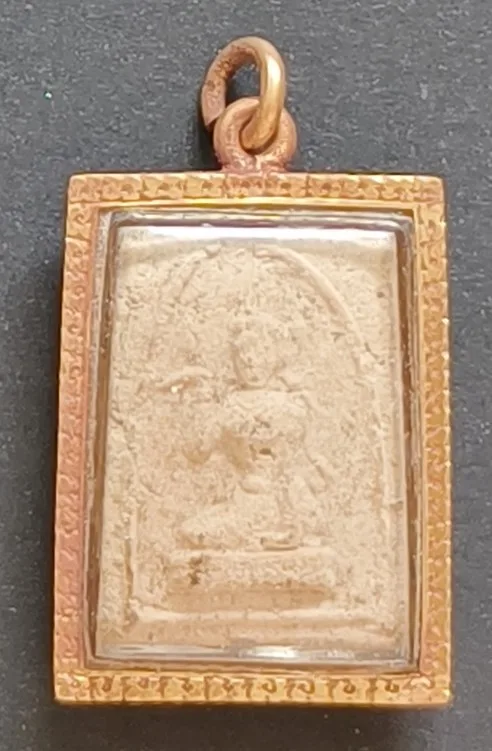
 Hover to view full image
TA-003 · available
Nang Kwak
Nang Kwak is a widely recognized auspicious figure in Thai religious and folk devotional culture. She is commonly depicted as a beautiful woman seated with one hand raised in a beckoning gesture, symbolically calling customers, opportunities, prosperity, and good fortune toward the owner.
Unlike temple amulets that are associated with one particular monk or production, Nang Kwak has been created in many forms by different temples, monks, craftsmen, and amulet makers throughout Thailand. As a result, there is no single universally applicable temple, monk, production year, or material that can be assigned to every Nang Kwak.
The traditional image of Nang Kwak is closely associated with commerce and prosperity. The raised hand is commonly interpreted as a gesture of beckoning or inviting, giving rise to the popular belief that Nang Kwak can attract customers and encourage business activity. She is therefore especially popular among shopkeepers, market traders, restaurant owners, business operators, and people involved in sales.
Nang Kwak is also frequently displayed in shops, homes, market stalls, businesses, and other commercial environments. Devotees may place her in a prominent position as a symbol of prosperity and auspicious fortune.
Different Nang Kwak creations can vary substantially in appearance and construction. Some are produced as small amulets intended to be carried or worn, while others are larger figures designed to be placed in a shop or business. Materials may include sacred powder, clay, metal, wood, resin, and other consecrated substances.
Traditional examples may also incorporate sacred powders, herbs, minerals, flowers, or other materials according to the particular temple or master's consecration tradition. Therefore, the material field should always be recorded according to the specific Nang Kwak specimen rather than assumed from the name alone.
The spiritual significance of Nang Kwak is primarily associated with Metta Maha Niyom, an important concept in Thai Buddhist devotional culture concerning loving-kindness, goodwill, popularity, and favorable relationships. In popular amulet traditions, these qualities are often connected with attracting customers, building trust, encouraging business opportunities, and promoting harmonious interactions.
Nang Kwak should nevertheless be understood within its cultural and devotional context. Traditional beliefs concerning prosperity, attraction, protection, and good fortune are matters of faith and cultural tradition rather than scientifically proven effects.
For collectors, identifying a particular Nang Kwak requires more information than the figure's general appearance. Important factors can include the temple or maker, monk or master, production period, mold or style, material, sacred ingredients, inscriptions, provenance, condition, and established collector references.
Because Nang Kwak has been produced for many generations and by numerous temples and craftsmen, collectors should be particularly careful when evaluating claims about age, origin, monk attribution, sacred ingredients, and authenticity. A specific piece should ideally be catalogued using its documented temple, master, edition, and provenance.
Today, Nang Kwak remains one of Thailand's most recognizable symbols of commercial prosperity and auspicious fortune. Her distinctive beckoning gesture and long association with trade and business have made her especially popular among merchants and business owners, while her cultural significance continues to make her an interesting subject for Thai amulet collectors and students of Thai devotional traditions.
IMPORTANT PAYMENT NOTICE
By proceeding with payment, you acknowledge that your payment is final and non-refundable, except where a refund is expressly approved by us or required by applicable law.
Please review your offer, the Item details, rental conditions, applicable fees, and Terms & Conditions carefully before making payment.
By completing payment, you confirm that you have read and accepted our Terms & Conditions.
- Temple
- Various Thai temples and amulet makers
- Monk
- Various monks and masters
- Material
- Sacred powder, clay, metal, wood, ivory, resin, and other consecrated materials depending on the edition