 Hover to view full image
TA-006 · available
Phra Kring
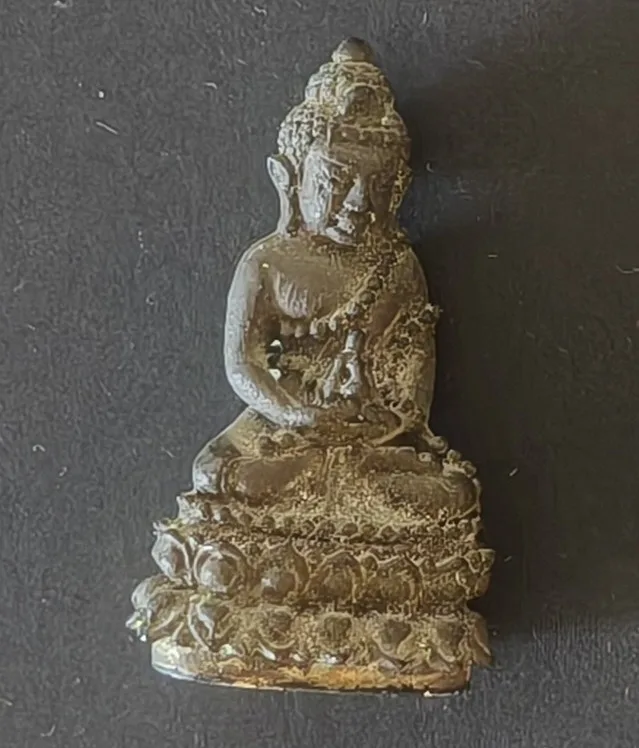
Phra Kring is one of the most distinctive forms of Thai Buddhist sacred imagery and amulet collecting. It is generally represented as a small seated Buddha image, traditionally associated with the Medicine Buddha, and is particularly recognized for its connection with health, healing and compassionate care.
The name "Phra Kring" is commonly associated with the small metal Buddha images that contain a small object or metal component inside, producing a characteristic sound when the image is shaken. This distinctive feature is reflected in the name "Kring," which is associated with the ringing sound.
Phra Kring has a long history within Thai Buddhist devotional culture and has been produced by various temples and masters over different periods. Among the most important traditions is the Phra Kring Wat Suthat tradition associated with Wat Suthat Thepwararam in Bangkok.
Wat Suthat is an important historic Buddhist temple and has become particularly well known among amulet collectors for its Phra Kring tradition. Different generations and editions associated with the temple can vary in design, production method, material composition, inscriptions, and consecration history.
Phra Kring is traditionally connected with the Medicine Buddha (Bhaisajyaguru), whose Buddhist tradition is associated with healing, compassion and relief from suffering. Consequently, devotees commonly regard Phra Kring as an auspicious sacred object associated with health, well-being, protection and spiritual support.
The traditional spiritual associations of Phra Kring should be understood within Buddhist devotional and cultural traditions. Claims regarding healing or supernatural effects are matters of faith and personal belief rather than scientifically established medical effects.
Phra Kring examples are generally made from metal and may contain different combinations of bronze, brass, copper, or other sacred metal alloys. The exact composition varies considerably according to the temple, master, production year, edition, and casting tradition.
Some Phra Kring are deliberately constructed with an internal component that produces the characteristic ringing sound. Collectors may examine this feature together with the image's casting characteristics, dimensions, base, facial details, inscriptions, surface, metal composition, and other technical characteristics when studying a particular specimen.
The history of Phra Kring is complex because the name covers numerous productions from different temples and periods. Consequently, it is not appropriate to assign one monk, temple, year, or material to every Phra Kring.
For collectors, the exact identification of a Phra Kring should therefore include the temple, production year, edition, master or consecration lineage, mold, material, dimensions, inscriptions, provenance, and condition whenever these details are known.
Wat Suthat Phra Kring productions are particularly significant within Thai amulet collecting, but other temple traditions can also have considerable historical and devotional importance. Later commemorative editions and modern productions should be distinguished from older historical examples.
Authentication is especially important when dealing with older or highly sought-after Phra Kring. A collector should not rely on a single feature such as the metal composition, ringing sound, Buddha posture, or surface appearance. A proper assessment should consider the complete set of characteristics and, where necessary, compare the piece with established reference examples or consult an experienced specialist.
Today, Phra Kring continues to be respected as both a Buddhist devotional object and an important form of Thai sacred art. Its association with the Medicine Buddha, health and compassion, together with the distinctive ringing construction and long history of temple production, has made Phra Kring an enduring favorite among Thai Buddhist devotees and collectors.
IMPORTANT PAYMENT NOTICE
By proceeding with payment, you acknowledge that your payment is final and non-refundable, except where a refund is expressly approved by us or required by applicable law.
Please review your offer, the Item details, rental conditions, applicable fees, and Terms & Conditions carefully before making payment.
By completing payment, you confirm that you have read and accepted our Terms & Conditions.
- Temple
- Wat Suthat Thepwararam
- Monk
- Various monks and masters; associated particularly with the Wat Suthat tradition
- Material
- Bronze, brass, copper, sacred metal alloys, and other consecrated materials depending on the edition