 Hover to view full image
TA-017 · available
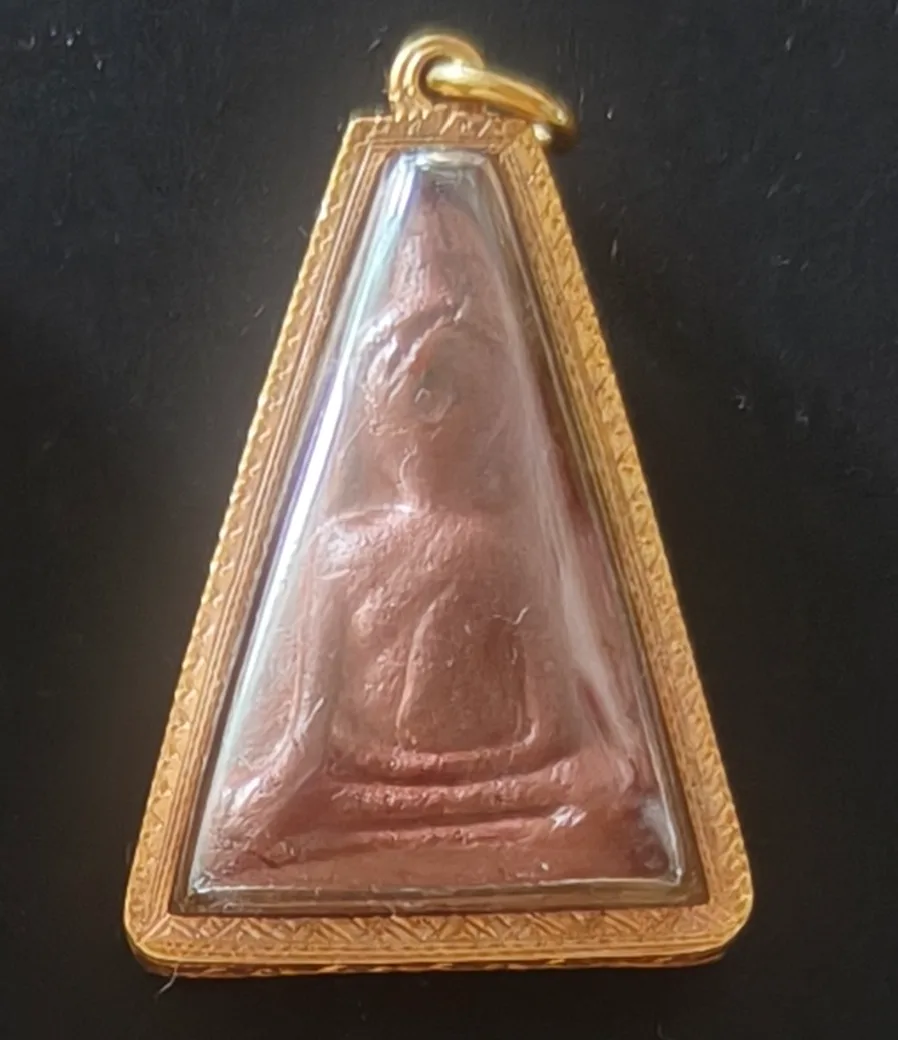
Phra Nang Phaya Amulet – The Queen of Thai Buddhist Amulets
The Phra Nang Phaya Amulet is one of the most famous and historically significant categories of Thai Buddhist amulets. It is traditionally associated with Wat Nang Phaya in Phitsanulok Province and is widely recognized for its distinctive triangular shape and graceful seated Buddha image.
Phra Nang Phaya is traditionally counted among the major ancient amulet traditions of Thailand. Its origins are generally associated with the historic city of Phitsanulok and the Ayutthaya period. However, the exact history and production dates of individual ancient examples can be difficult to establish, and attribution should be based on the specific amulet rather than the name alone.
The design of Phra Nang Phaya is particularly distinctive. The Buddha is normally depicted seated in a calm and dignified posture, surrounded by a triangular composition. The strong yet elegant form is one of the principal characteristics that distinguishes Phra Nang Phaya from many other traditional Thai amulet types.
Traditional examples are generally associated with sacred clay and naturally occurring mineral and earthen materials. The composition, color, texture, density, and surface characteristics can vary considerably among surviving examples. Age, environmental conditions, storage, and historical use can also influence the appearance of an individual amulet.
The name "Nang Phaya" is often translated in connection with a queen or royal woman, contributing to the amulet's distinctive cultural identity. In traditional Thai belief, the amulet has been associated with qualities such as authority, confidence, charm, protection, and success. These associations belong to Thai Buddhist and amulet traditions and should be understood as matters of cultural and religious belief rather than scientifically proven effects.
For collectors, Phra Nang Phaya is particularly important because genuine ancient examples are rare and numerous later reproductions and officially issued editions exist. Identifying an individual amulet requires careful examination of its shape, Buddha image, proportions, clay composition, surface characteristics, depth of relief, edge profile, natural aging, and other physical details.
Provenance can also be an important consideration. Historical documentation, previous ownership records, reputable certification, and comparison with established reference examples may provide valuable information when evaluating a potentially significant piece.
Phra Nang Phaya has also inspired numerous later temple and commemorative editions. These modern and later issues can have their own historical and religious significance, but they should not automatically be represented as ancient Ayutthaya-period examples.
The enduring popularity of Phra Nang Phaya reflects both its religious importance and its artistic character. Its distinctive triangular silhouette, serene Buddha image, and connection with the historic Buddhist heritage of Phitsanulok have made it one of the most recognizable and respected forms of Thai Buddhist amulets.
Whether appreciated as an object of Buddhist devotion, an example of traditional Thai religious art, or a historical collectible, the Phra Nang Phaya Amulet represents an important part of Thailand's rich Buddhist and cultural heritage.
- Temple
- Wat Nang Phaya, Phitsanulok, Thailand
- Monk
- Traditionally associated with the ancient Phitsanulok Buddhist tradition; the original historical maker is not definitively documented.
- Material
- Traditionally made from sacred clay and mineral-rich earthen materials. Later editions may use different clay compositions and consecrated materials.