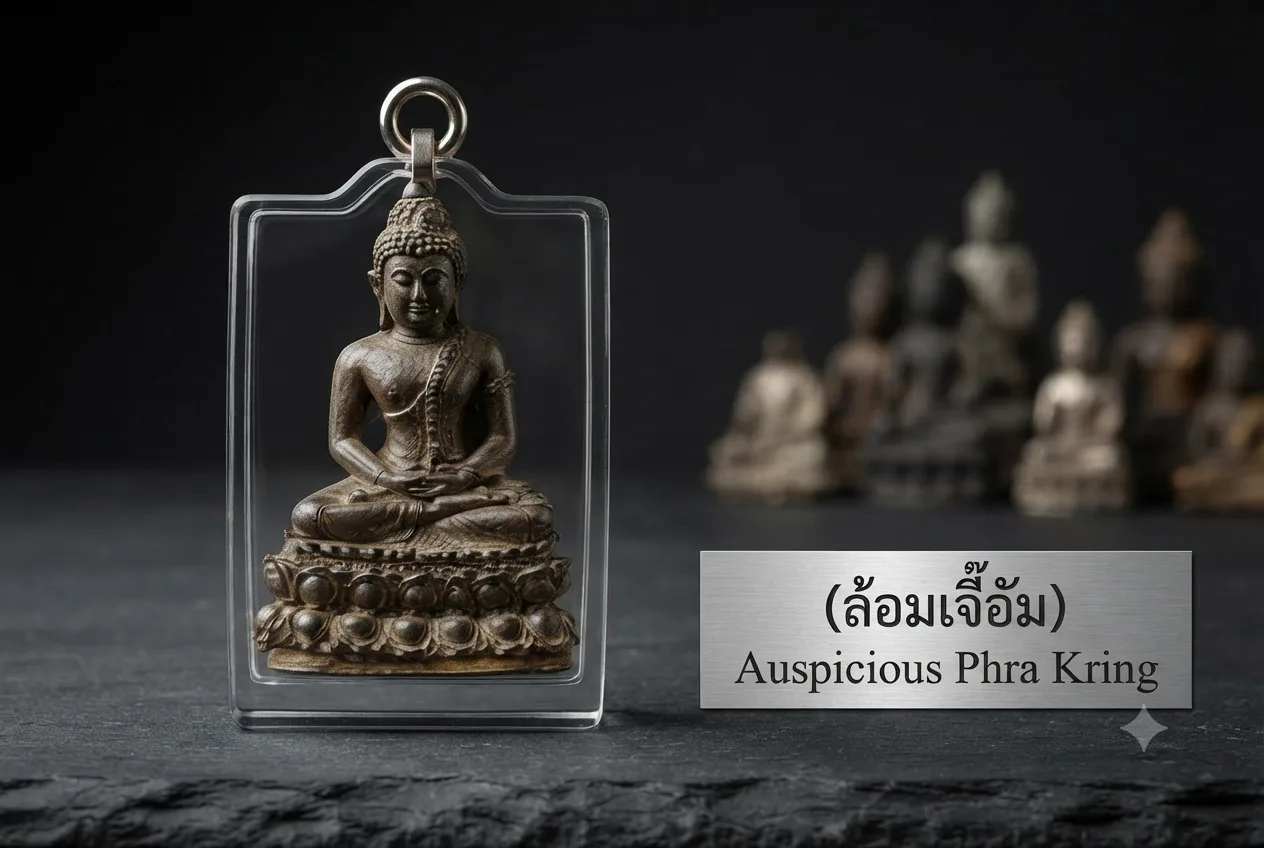
Thai amulets have played an important role in Thailand's religious and cultural heritage for centuries. Often associated with Buddhist temples, revered monks, sacred inscriptions and traditional rituals, these small objects are valued not only as religious symbols but also as meaningful pieces of Thai history.
For many devotees, wearing a Thai amulet is an expression of faith and respect for Buddhism. Collectors may also appreciate amulets for their craftsmanship, historical importance, rarity and connection to particular temples or monks. Traditional beliefs attribute various spiritual benefits to certain amulets, although these beliefs should be understood within their religious and cultural context rather than as scientifically proven effects.
What Is a Thai Amulet?
A Thai amulet, commonly known as Phra Khrueang (พระเครื่อง), is a sacred object traditionally created or blessed for religious and spiritual purposes. Many amulets contain Buddhist imagery, sacred inscriptions, yantra designs or representations of revered monks.
Amulets may be made from materials such as sacred powder, clay, metal, wood, herbs, minerals and other traditionally significant substances. Some are produced by temples, while others are associated with individual monks or religious ceremonies.
The value of an amulet can depend on many factors, including its temple of origin, monk, production period, material, condition, provenance, rarity and historical significance.
The History of Thai Amulets
The history of Thai amulets is closely connected with the development of Buddhism in Thailand and the wider religious traditions of Southeast Asia. Sacred objects have traditionally been used as reminders of Buddhist teachings, devotional practices and spiritual discipline.
Over time, Thai amulets developed into distinctive forms associated with different historical periods, regions, temples and Buddhist traditions. Ancient amulets discovered at important archaeological and religious sites are particularly valuable for understanding Thailand's religious and artistic heritage.
Early Buddhist Influences
Early sacred images and devotional objects in the region reflected the influence of Theravada Buddhism as well as earlier Indian and regional traditions. Buddhist imagery became an important means of expressing devotion and reminding practitioners of the Buddha's teachings.
As Buddhism became deeply established in Thailand, religious objects were increasingly produced and preserved by temples and communities.
Temple Amulets
Thai temples have historically served as important centers of religious, educational and cultural life. Some temples produced amulets as part of religious ceremonies, fundraising activities or commemorative occasions.
Amulets may be created to commemorate the construction or renovation of a temple, an important religious anniversary, the life of a respected monk or a significant Buddhist occasion.
Amulets Associated With Monks
Some of the most respected Thai amulets are associated with famous monks known for their meditation practice, Buddhist knowledge, compassion and spiritual reputation.
Devotees may seek amulets connected with particular monks because of their personal faith in the monk's teachings and spiritual practice. This has contributed to the development of numerous amulet traditions throughout Thailand.
Why Are Thai Amulets Important in Thai Culture?
Thai amulets represent more than religious objects. They can also serve as tangible connections to family traditions, temples, historical periods and local communities.
For some people, an amulet received from a parent, grandparent, monk or respected temple can have considerable sentimental value. The object becomes a reminder of family, faith and important moments in life.
Amulet collecting has also developed into a specialized field in Thailand. Serious collectors study temple histories, monk biographies, production methods, materials, inscriptions, casting techniques and historical records to identify and understand different amulet types.
Traditional Benefits Associated With Thai Amulets
Different Thai amulets are traditionally associated with different spiritual qualities. These beliefs vary between temples, monks, regions and individual traditions.
Commonly attributed benefits include the following:
1. Protection
Protection is one of the most widely recognized traditional beliefs associated with Thai amulets. Devotees may wear certain amulets as a spiritual reminder of protection from danger, misfortune and negative influences.
In traditional belief, the protective quality of an amulet may be connected to Buddhist blessings, sacred inscriptions, meditation practices, consecration ceremonies or the spiritual reputation of the monk who blessed it.
2. Confidence and Peace of Mind
Many people wear amulets because they feel reassured when carrying a sacred object connected to their faith. The amulet can serve as a daily reminder to remain calm, mindful and confident when facing difficulties.
From a cultural and psychological perspective, meaningful religious objects can provide a sense of personal connection and emotional reassurance.
3. Metta and Kindness
Some Thai amulets are traditionally associated with Metta Mahaniyom, a concept involving loving-kindness, goodwill, charm and harmonious relationships.
Devotees may believe that such amulets encourage positive interactions and help the wearer cultivate kindness and goodwill toward others.
4. Success and Opportunity
Certain amulets are traditionally associated with success, good fortune and opportunities. Business owners, workers and people starting new ventures may choose amulets according to these traditional beliefs.
However, an amulet should not be regarded as a guaranteed method of achieving financial or professional success. Personal effort, preparation, ethical conduct and sound decision-making remain essential.
5. Good Fortune
Some amulets are believed by devotees to attract good fortune or reduce obstacles. These beliefs are particularly common among certain popular amulet traditions.
For many wearers, the amulet represents hope and positive intention rather than a guaranteed supernatural outcome.
6. Mindfulness and Spiritual Reminder
One of the most meaningful benefits of a Buddhist amulet can be its ability to remind the wearer of Buddhist principles.
Seeing or touching an amulet can encourage a person to remember qualities such as compassion, patience, generosity, morality and mindfulness. In this sense, the amulet can function as a personal spiritual reminder throughout everyday life.
Popular Types of Thai Amulets
Thailand has an enormous variety of amulets. Different designs have different historical origins and traditional associations.
Phra Somdej
Phra Somdej is among the most famous categories of Thai Buddhist amulets. It is traditionally associated with Somdej Phra Phutthachan (Toh) and important temples and amulet traditions connected with his legacy.
Collectors particularly value historically significant examples because of their craftsmanship, provenance and cultural importance.
Phra Nang Phaya
Phra Nang Phaya is a highly regarded amulet tradition associated with Phitsanulok. It is particularly recognized for its distinctive Buddha imagery and historical significance.
Phra Rod
Phra Rod is one of the well-known ancient Thai amulet types and is traditionally associated with Lamphun. Its historical origins and distinctive design have made it an important subject among collectors.
Phra Khun Paen
Phra Khun Paen is a popular amulet tradition associated with various temples and versions throughout Thailand. Different editions have different histories, materials and traditional associations.
Phra Pidta
Phra Pidta is characterized by the Buddha figure covering the face with the hands. Various traditions associate Phra Pidta with protection, avoidance of harmful influences and the blocking of undesirable circumstances.
Jatukam Ramathep
Jatukam Ramathep became especially popular in modern Thailand and is associated with beliefs concerning protection, fortune and prosperity. Numerous editions and temples have produced related amulets.
How Thai Amulets Are Consecrated
Traditional Thai amulets may undergo a consecration ceremony known as Phutthaphisek. Such ceremonies can involve monks chanting Buddhist scriptures, meditation, blessings and other religious practices.
The exact procedure varies according to the temple, tradition and purpose of the amulet. In some cases, several respected monks participate in a ceremony, while other amulets may be personally blessed by a particular monk.
For collectors, understanding the history of a consecration ceremony can be an important part of understanding an amulet's background and significance.
Materials Used in Thai Amulets
Thai amulets can be produced from a wide variety of materials. Common examples include:
- Sacred powder
- Clay
- Metal
- Bronze
- Lead-based traditional alloys
- Wood
- Herbal materials
- Natural minerals
- Temple relic materials
The material may provide useful information about an amulet's production method and historical period. However, material alone is generally not sufficient to authenticate an amulet.
Thai Amulets as Collectibles
Thai amulet collecting has developed into a specialized area of cultural collecting. Experienced collectors often examine an amulet's shape, dimensions, texture, material, printing or casting characteristics, inscriptions, age and provenance.
Historical documentation is particularly important. An amulet accompanied by credible provenance, temple records or reliable historical information can be easier to understand and evaluate than an example with an unknown background.
Collectors should also be cautious when purchasing rare or expensive amulets because the market contains reproductions, later editions and counterfeit examples.
Spiritual Belief and Responsible Understanding
The traditional benefits attributed to Thai amulets belong primarily to the areas of religious belief, cultural tradition and personal devotion. There is no scientific evidence establishing that an amulet itself can guarantee protection, wealth, health, success or other supernatural outcomes.
For this reason, amulets are best appreciated as objects of faith, cultural heritage and personal meaning. Wearing an amulet can complement a person's spiritual practice, but it should not replace responsible action, medical treatment, financial planning, safety precautions or professional advice when these are needed.
How to Choose a Thai Amulet
When selecting a Thai amulet, it is useful to consider both its spiritual meaning and its historical background.
- Learn about the temple: Understand where the amulet originated and the temple's history.
- Research the monk: Learn about the monk's life, teachings and reputation.
- Understand the edition: Different editions may have different production dates, materials and characteristics.
- Check provenance: Reliable historical documentation can be valuable, especially for expensive amulets.
- Examine condition: Original condition and restoration can affect collectibility.
- Compare references: Study reputable reference books, experienced collectors and established sources.
- Buy responsibly: Do not assume that a high price automatically means an amulet is authentic or spiritually superior.
The Deeper Meaning of Thai Amulets
The significance of a Thai amulet goes beyond its physical appearance. For devotees, it may represent faith, devotion, protection and a connection with Buddhist teachings. For collectors, it may represent history, craftsmanship and cultural heritage.
Perhaps the most important aspect of an amulet is the meaning that its wearer attaches to it. A sacred object can encourage mindfulness and remind a person to live with compassion, integrity and awareness.
Conclusion
Thai amulets have a rich history deeply connected with Buddhism, temples, monks and Thai cultural traditions. Over generations, they have become important religious objects, cultural artifacts and collectibles.
Traditional beliefs associate different amulets with qualities such as protection, good fortune, kindness, success and spiritual reassurance. While these benefits should be understood as matters of faith and tradition rather than scientifically proven effects, the cultural and personal significance of Thai amulets remains considerable.
Whether worn as a devotional object or collected as an example of Thai heritage, a Thai amulet can provide a meaningful connection to the country's religious history and continuing Buddhist traditions.