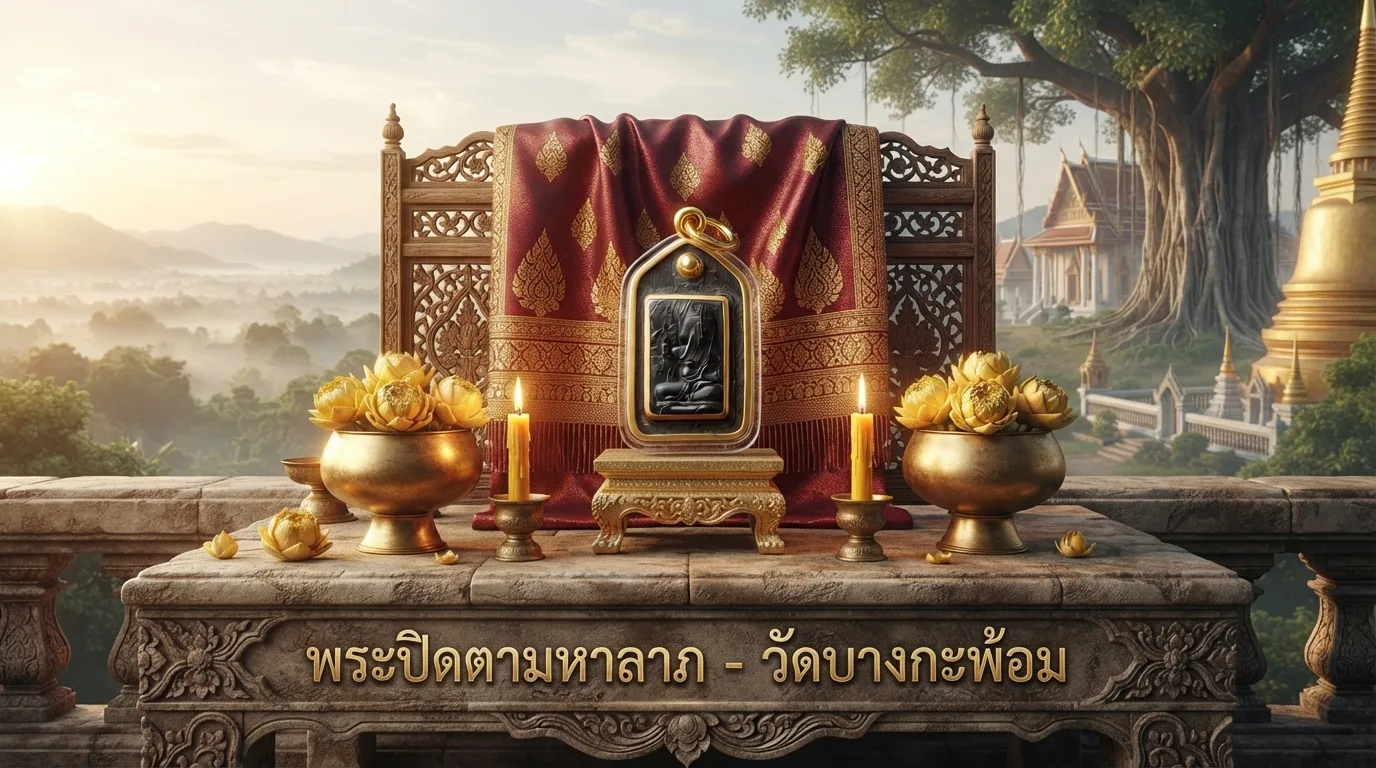
Thai amulets are a familiar part of everyday life in Thailand. They can be seen worn around the neck, carried in wallets or bags, displayed in homes and businesses, and carefully preserved by collectors. For many Thai people, an amulet is much more than a decorative pendant. It can represent faith, protection, respect for Buddhism, family heritage and a personal connection to a temple or revered monk.
The tradition of wearing Thai amulets has developed over generations and reflects the close relationship between Buddhism, Thai culture and local spiritual traditions. Different people may have different reasons for wearing an amulet, and not everyone views them in exactly the same way.
What Is a Thai Amulet?
Thai Buddhist amulets are commonly known as Phra Khrueang (พระเครื่อง). They are sacred or devotional objects that often feature images of the Buddha, revered monks, Buddhist symbols or traditional sacred designs.
Amulets can be made from many materials, including sacred powder, clay, metal, wood and other traditionally significant materials. Some originate from temples and are connected to particular monks, ceremonies or historical periods.
For devotees, the importance of an amulet often comes from its religious and cultural background rather than simply its physical appearance.
1. Faith and Devotion to Buddhism
One of the most important reasons people wear Buddhist amulets is faith.
A Buddha image or sacred amulet can serve as a constant reminder of Buddhist teachings. Wearing one may encourage the wearer to remember principles such as compassion, patience, generosity, mindfulness and ethical conduct.
For many devotees, the amulet is therefore not viewed simply as an object that provides supernatural assistance. It can also represent their personal respect for Buddhism and their commitment to living according to Buddhist principles.
2. Traditional Beliefs About Protection
Protection is one of the most widely recognized traditional beliefs surrounding Thai amulets.
Certain amulets are traditionally believed to provide spiritual protection against danger, misfortune or negative influences. These beliefs may be associated with the reputation of the monk, the temple, sacred inscriptions, meditation practices or the consecration ceremony connected with the amulet.
For example, some devotees specifically seek amulets traditionally associated with protection, while others choose an amulet connected with a monk whom they deeply respect.
These protective effects are matters of religious and cultural belief rather than scientifically established properties of the amulet itself.
3. A Sense of Confidence and Reassurance
People may also wear amulets because they provide a sense of comfort and confidence.
When facing an uncertain situation, carrying an object associated with faith and spiritual protection can provide reassurance. A person who has worn the same amulet for many years may develop a strong emotional connection with it.
The feeling of reassurance can be particularly meaningful when an amulet was received from a parent, grandparent, monk or respected temple.
4. Good Fortune and Prosperity
Some Thai amulets are traditionally associated with good fortune, prosperity and success.
Business owners, salespeople, workers and entrepreneurs may choose amulets based on traditional beliefs concerning wealth, opportunity, popularity or successful negotiations.
Different amulet traditions have different associations. Some are connected with Metta Mahaniyom, traditionally referring to loving-kindness, goodwill and attraction, while others are associated with prosperity or fortune.
It is important to understand these associations as traditional beliefs rather than guarantees of financial success.
5. Respect for Revered Monks
Thai amulet culture is closely connected with the country's respected Buddhist monks.
Some amulets become particularly famous because they are associated with monks who were respected for their Buddhist knowledge, meditation practice, compassion and spiritual discipline.
For devotees, wearing an amulet associated with a respected monk can represent admiration for that monk and remembrance of his teachings.
This is one reason why the history of the monk can be just as important as the design of the amulet itself.
6. Connection to a Temple
Many Thai amulets have a direct connection to a Buddhist temple.
An amulet may have been produced to commemorate a temple event, religious ceremony, anniversary, construction project or important Buddhist occasion. Some are specifically associated with a particular temple and its resident monks.
For people who have visited or have a personal connection with a temple, wearing its amulet can serve as a reminder of that place and its religious community.
7. Family Tradition
Amulets are sometimes passed from one generation to another.
A father may give an amulet to his son, a mother may pass one to her daughter, or grandparents may give amulets to younger family members. In these situations, the value of the amulet may be deeply personal.
An inherited amulet may remind its owner of a family member who has passed away or of an important period in the family's history.
Such an amulet may have enormous sentimental value even if it has little monetary value in the collector's market.
8. Cultural Identity and Thai Heritage
Thai amulets are also part of Thailand's broader cultural heritage.
Different regions, temples and historical periods have produced distinctive amulet traditions. Collectors and researchers study their designs, materials, inscriptions, production methods and historical backgrounds.
Wearing or collecting an amulet can therefore be a way of maintaining a connection with Thai history and traditional culture.
9. Personal Spiritual Practice
Some people use an amulet as part of their personal spiritual routine.
Looking at an amulet may remind the wearer to pause, reflect or practice mindfulness. Others may silently express gratitude or recall Buddhist teachings when putting on their amulet each morning.
In this sense, the amulet can function as a physical reminder of a person's spiritual intentions.
10. Belief in Metta Mahaniyom
Metta Mahaniyom is an important concept associated with certain Thai amulets and traditional Buddhist-influenced beliefs.
The term is commonly associated with loving-kindness, goodwill, harmonious relationships and being well received by others. Amulets connected with this tradition may be popular among people who work closely with customers, clients or the public.
Rather than understanding this only as supernatural attraction, it can also be viewed as a reminder to approach other people with kindness, respect and positive intentions.
11. Safety During Travel and Daily Activities
Some people wear amulets when travelling or performing activities they consider risky.
Traditional beliefs may associate particular amulets or monks with protection during journeys and protection from accidents or danger. This is one reason amulets can be seen worn by drivers, travellers and people working in physically demanding occupations.
However, an amulet should never be considered a substitute for practical safety measures. Safe driving, proper equipment and responsible decisions remain essential.
12. Collecting and Historical Interest
Not everyone who owns a Thai amulet wears it primarily for spiritual reasons. Some people collect amulets because of their historical, artistic or numismatic-like collectible qualities.
Collectors may study:
- The temple of origin
- The monk associated with the amulet
- The production year or period
- The material used
- The amulet's design and characteristics
- The production edition
- Historical provenance
- Condition and preservation
- Rarity
For serious collectors, an amulet can be a small piece of tangible Thai history.
Why Are Some Thai Amulets More Popular Than Others?
Popularity can depend on several factors. The reputation of the monk, the history of the temple, the age of the amulet, the production quantity, historical records and collector demand can all influence interest.
Some amulets become particularly famous because they are associated with respected monks or important temples. Others become collectible because only a limited number were produced or because examples from an early historical period are difficult to find.
This is why two amulets that look superficially similar can have very different levels of collector interest.
Do Thai People Believe Amulets Really Work?
There is no single answer because beliefs differ from person to person.
Some devotees have strong faith in the spiritual protection or other traditional benefits associated with their amulet. Others view an amulet primarily as a reminder of Buddhist teachings. Some appreciate it mainly for its cultural or historical significance.
It is also possible for a person to value an amulet spiritually while recognizing that its claimed supernatural effects cannot be scientifically guaranteed.
The meaning of an amulet is therefore often personal and influenced by faith, family background, cultural traditions and individual experience.
Is Wearing a Thai Amulet the Same as Worshipping It?
Not necessarily.
For many Buddhists, an amulet represents devotion, remembrance and respect rather than being treated as a deity. A Buddha image traditionally represents the Buddha and his teachings, while a monk image may remind devotees of the monk's life and spiritual example.
Practices and interpretations vary among individuals and Buddhist traditions, so it is useful to avoid assuming that every wearer has the same understanding of an amulet.
Are Thai Amulets Only for Thai People?
No. People from many different countries are interested in Thai Buddhist amulets because of their religious, historical, artistic and cultural significance.
Non-Thai collectors may study famous Thai temples, monks and amulet traditions, while some international devotees wear amulets as part of their personal Buddhist practice.
Anyone interested in Thai amulets should approach them respectfully and take time to understand the cultural and religious background behind the particular amulet.
Traditional Beliefs vs. Proven Facts
It is important to distinguish between cultural beliefs and scientifically established facts.
Traditional Thai culture attributes various qualities to particular amulets, including protection, fortune, prosperity, charm and success. These associations are an important part of the history and culture surrounding Thai amulets.
However, there is no scientific basis for claiming that an amulet can guarantee protection from accidents, make someone wealthy, cure illness or ensure success.
The practical value of an amulet may instead come from its ability to inspire confidence, mindfulness, positive behavior and a stronger connection with one's cultural or spiritual traditions.
How to Respectfully Wear a Thai Amulet
People who choose to wear a Thai amulet should treat it with appropriate respect, particularly when the amulet contains a Buddhist image or is associated with a revered monk.
Good practices include keeping the amulet clean and protected, learning about its religious background, avoiding disrespectful treatment and understanding the traditions associated with it.
For valuable or historically significant amulets, proper storage and careful handling can also help preserve the object for future generations.
Conclusion
So, why do Thai people wear amulets?
The answer is deeply personal. For some, an amulet represents Buddhist faith. For others, it symbolizes protection, good fortune, confidence or spiritual reassurance. For many families, an amulet is a treasured connection to parents, grandparents, temples and respected monks.
Thai amulets are also important cultural artifacts. Their history connects Buddhism, temples, monks, craftsmanship and generations of Thai tradition.
Whether worn for devotion, cultural identity, personal meaning or collecting, Thai amulets remain an important part of Thailand's religious and cultural landscape. Understanding the history and beliefs behind them allows both devotees and collectors to appreciate these objects with greater knowledge and respect.