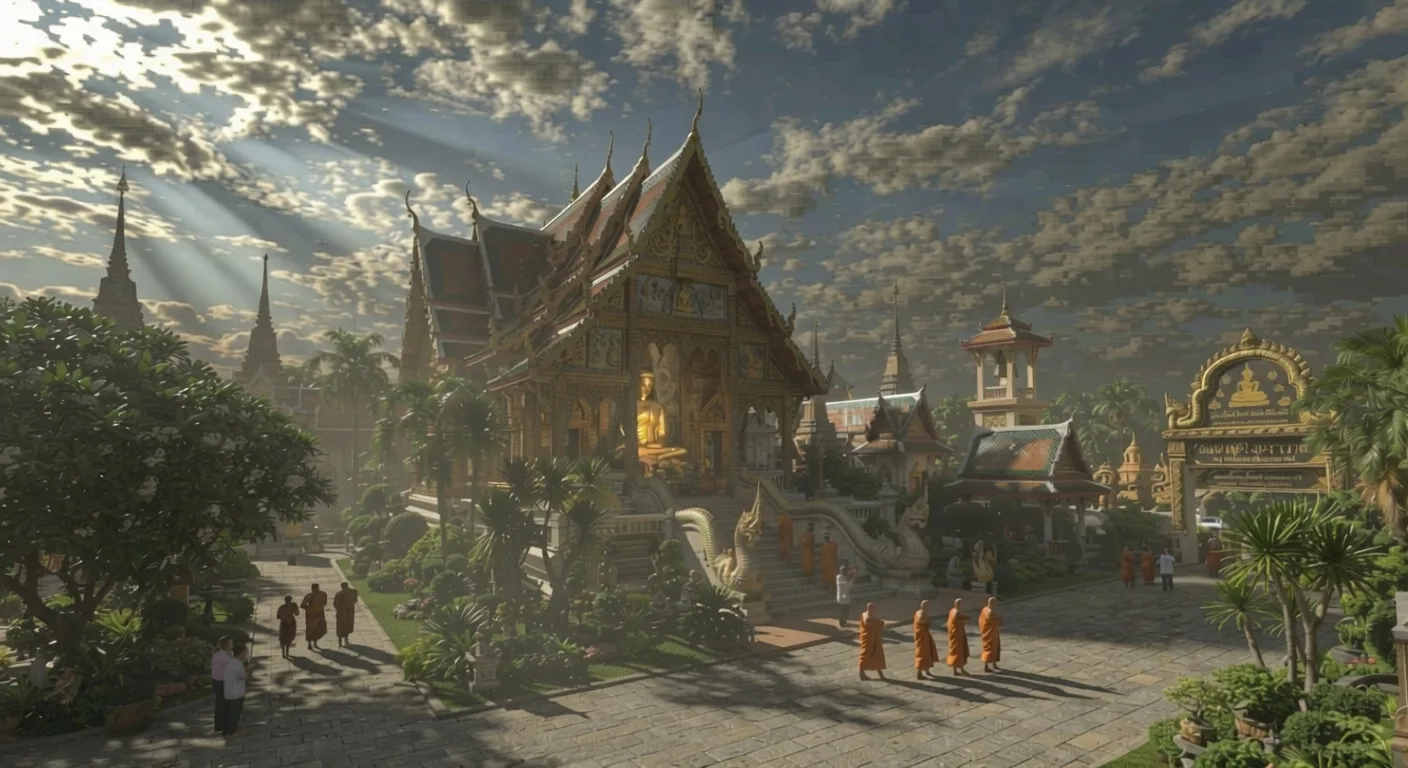
Thailand is home to thousands of Buddhist temples, each reflecting a unique combination of Buddhist teachings, Thai history, architecture, local traditions and community life. Known in Thai as wat, these sacred places have played an essential role in Thai society for centuries.
From ancient temples dating back to the Ayutthaya period to royal temples established during the Rattanakosin era, Thai temples preserve an extraordinary record of the country's religious and cultural development. They are places of worship, meditation, merit-making, education and community life, as well as important centres for the preservation of Thai Buddhist art and heritage.
For devotees and collectors of Thai Buddhist amulets, temples have an additional significance. Many renowned monks became associated with particular temples, and sacred objects produced or consecrated under their guidance have become important parts of Thailand's religious and collecting traditions.
This guide explores the history and significance of Thai temples and introduces selected temples associated with famous Buddhist monks, meditation traditions, sacred objects and Thai amulet culture.
What Is a Thai Buddhist Temple?
A Thai Buddhist temple is traditionally known as a wat. A temple complex can contain several important buildings and religious spaces, including an ubosot, viharn, chedi or stupa, monk residences, meditation areas and other structures used for Buddhist ceremonies.
The ubosot, or ordination hall, is one of the most sacred buildings in a traditional Thai Buddhist temple. It is used for important monastic ceremonies and is normally surrounded by sacred boundary stones known as sema.
A viharn is generally a hall used for worship, religious gatherings and devotional activities. Many viharns contain important Buddha images that are respected by both local communities and visiting devotees.
Chedi or stupa structures may commemorate Buddhist relics, important monks or significant religious events. Some have become major landmarks in their own right.
Temple grounds may also include meditation halls, libraries, schools, cremation facilities and residences for monks. This illustrates why the Thai temple should be understood as more than a single religious building.
The Role of Temples in Thai Buddhism
Thai temples have traditionally served as important centres of Buddhist life.
For monks, the temple provides a place for monastic discipline, meditation, Buddhist study, chanting and teaching. For laypeople, it provides opportunities to make merit, observe Buddhist precepts, participate in ceremonies and listen to Dhamma teachings.
Temples can also serve the wider community through education, charitable activities, cultural preservation and community events.
This continuing relationship between temple and community is one reason Thailand's Buddhist heritage remains a living tradition rather than simply a collection of historical monuments.
Thai Temples and the History of Thailand
The history of Thai temples is closely connected with the history of Thailand itself.
Temples were established and renovated under successive kingdoms and rulers, including the Sukhothai, Ayutthaya, Thonburi and Rattanakosin periods.
As political centres changed, temples continued to function as places where Buddhist teachings, artistic traditions and local cultural knowledge were preserved.
Some temples are several centuries old, while others became particularly important during the nineteenth and twentieth centuries because of the monks who served there.
Consequently, studying Thai temples provides an excellent way to understand the development of Thai Buddhism, architecture, local communities and sacred traditions.
Thai Temple Architecture
Thai Buddhist architecture is recognised for its distinctive roofs, decorative details, Buddha images, murals, chedis and carefully planned sacred spaces.
However, there is no single architectural style that represents every Thai temple.
Regional traditions developed throughout Thailand, resulting in differences between temples in Central Thailand, Northern Thailand, Northeastern Thailand and Southern Thailand.
Lanna temples in the north, for example, reflect the artistic heritage of Northern Thailand, while temples in Bangkok and the central plains often display architectural developments associated with the Ayutthaya and Rattanakosin traditions.
Some royal temples built during the nineteenth century also incorporate Western architectural influences, demonstrating how Thai artistic traditions adapted during a period of rapid social and political change.
Royal Temples in Thailand
Some Thai temples have a particularly close historical relationship with the Thai monarchy and are classified as royal temples.
These temples often contain sophisticated architecture, important Buddha images and historical monuments associated with members of the royal family.
One notable example is Wat Thepsirin Tharawat in Bangkok.
Established during the reign of King Chulalongkorn (Rama V) in memory of Queen Thepsirin, the temple represents an important connection between Thai Buddhism, royal history and nineteenth-century architecture.
Its architecture is particularly interesting because traditional Thai elements were combined with Western-influenced design, reflecting the changing artistic environment of Siam during the period.
Thai Temples and Meditation Traditions
Thailand has a long history of Buddhist meditation traditions.
Some temples became especially famous because of respected meditation masters who lived and practised there.
These monks often emphasised Vipassana meditation, mindfulness, monastic discipline, simplicity and detachment.
One particularly distinctive tradition is the use of forest and cemetery environments for contemplation of impermanence and mortality.
The legacy of Luang Pho Kasem Khemako in Lampang provides an important example. His meditation and memorial site, commonly known as Sussan Trilak, became closely associated with his austere practice and contemplation of the Buddhist Three Characteristics.
Read more about Wat Susahn Sahlahwangthan – Sussan Trilak and Luang Pho Kasem.
Famous Thai Temples Associated with Revered Monks
Many Thai temples became nationally recognised because of the monks who served there.
These monks are remembered for their Buddhist teachings, meditation practice, community service and, in some cases, the sacred objects produced or consecrated under their guidance.
Among the temples in this collection are the following important sites.
Wat Ban Rai – Nakhon Ratchasima
Wat Ban Rai is strongly associated with Luang Phor Koon Parimontho, one of Thailand's most widely revered modern Buddhist monks.
Located in Nakhon Ratchasima, the temple became closely associated with Luang Phor Koon's long monastic career and his reputation for compassion, simplicity and helping devotees.
Luang Phor Koon amulets are highly recognised within Thai amulet culture, making Wat Ban Rai an important temple for both Buddhist devotees and collectors.
Read the complete Wat Ban Rai temple guide →
Wat Bang Nom Kho – Ayutthaya
Wat Bang Nom Kho in Phra Nakhon Si Ayutthaya Province is famous for its association with Luang Phor Parn, one of the most influential monks in Thai amulet history.
The temple's history extends back to the Ayutthaya period, while Luang Phor Parn's later association with the temple established it as a major destination for devotees.
His famous sacred objects, including the celebrated Phra Khun Phaen-style and animal-based amulets associated with his tradition, are important subjects among collectors.
Read the complete Wat Bang Nom Kho temple guide →
Wat Bang Phra – Nakhon Pathom
Wat Bang Phra in Nakhon Pathom is internationally recognised for its association with Luang Phor Pern and the living tradition of Sak Yant tattooing.
The temple represents a distinctive intersection of Buddhist devotion, traditional protective symbolism and Thai sacred culture.
Luang Phor Pern's amulets and sacred objects are also highly respected among Thai amulet enthusiasts.
Read the complete Wat Bang Phra temple guide →
Wat Chalong – Phuket
Wat Chalong, formally known as Wat Chaitararam, is one of Phuket's most important Buddhist temples.
The temple is particularly associated with Luang Phor Chaem, a highly respected monk remembered for his compassion, healing tradition and support for local people.
Wat Chalong remains one of Phuket's most important religious and cultural landmarks.
Read the complete Wat Chalong temple guide →
Wat Chang Hai Rat Buranaram – Pattani
Wat Chang Hai Rat Buranaram in Pattani is one of the most famous temples in southern Thailand and is inseparably associated with Luang Pu Thuad.
Luang Pu Thuad is among the most revered figures in Thai Buddhist devotional culture, and images of him appear on countless amulets throughout Thailand.
The temple therefore occupies a particularly important position in the history of Luang Pu Thuad amulets.
Read the complete Wat Chang Hai Rat Buranaram temple guide →
Wat Doi Mae Pang – Chiang Mai
Wat Doi Mae Pang represents the rich meditation heritage of Northern Thailand.
The temple is associated with respected Buddhist meditation traditions and provides an opportunity to explore the relationship between forest practice, Northern Thai Buddhism and revered meditation masters.
The temple's setting also reflects the close relationship between Buddhist practice and the natural environment found throughout Northern Thailand.
Read the complete Wat Doi Mae Pang temple guide →
Wat Nong Bua – Nan
Wat Nong Bua in Nan Province is an important example of Northern Thai Buddhist heritage.
The temple is especially notable for its traditional architecture and artistic heritage, reflecting the distinctive cultural identity of Nan and the wider Lanna region.
Its murals and architectural details provide valuable insight into the historical Buddhist culture of Northern Thailand.
Read the complete Wat Nong Bua temple guide →
Wat Pa Suttawat – Sakon Nakhon
Wat Pa Suttawat is associated with the forest-monastic tradition of Northeastern Thailand.
Temples in the Thai forest tradition place strong emphasis on meditation, monastic discipline, simplicity and the direct practice of Buddhist teachings.
Wat Pa Suttawat is therefore an important temple to include when exploring Thailand's meditation and forest-monastery heritage.
Read the complete Wat Pa Suttawat temple guide →
Wat Pak Khlong Makham Thao – Chai Nat
Wat Pak Khlong Makham Thao in Chai Nat is closely associated with Luang Pu Suk, one of Thailand's most respected traditional masters.
Luang Pu Suk became famous for his Buddhist practice, meditation knowledge and traditional sacred-object heritage.
His amulets and talismans are highly valued among collectors, making the temple particularly important in the study of traditional Thai sacred objects.
Read the complete Wat Pak Khlong Makham Thao temple guide →
Wat Paknam Bhasicharoen – Bangkok
Wat Paknam Bhasicharoen is one of Bangkok's most important Buddhist temples and has a long history dating back to the Ayutthaya period.
The temple became particularly influential under Luang Pu Sodh Candasaro, a renowned meditation master associated with the Dhammakaya meditation tradition.
Today, Wat Paknam is also known for the magnificent Maharatchamongkhon Stupa and the large Buddha image that has become a major Bangkok landmark.
Read the complete Wat Paknam Bhasicharoen temple guide →
Wat Pradu Chimphli – Bangkok
Wat Pradu Chimphli is an historic temple on Bangkok's Thonburi side, associated with the wider devotional tradition surrounding revered Thai Buddhist masters.
The temple's history, location beside Bangkok's historic canals and connection with Thai sacred-object traditions make it an interesting destination for those studying Bangkok's Buddhist heritage.
The temple dates to the early Rattanakosin period and is associated with the reign of King Rama III.
Read the complete Wat Pradu Chimphli temple guide →
Wat Sam Ngam – Nakhon Pathom
Wat Sam Ngam, also known as Wat Aranyikawas, is famous for its association with Luang Pho Tae Kangkhasuwanno.
The temple is particularly well known among devotees and collectors for its traditional sacred objects and the Kuman Thong tradition associated with Luang Pho Tae.
The temple also illustrates the important role that monks have traditionally played in local community development, religious education and Buddhist practice.
Read the complete Wat Sam Ngam temple guide →
Wat Susahn Sahlahwangthan – Sussan Trilak, Lampang
Wat Susahn Sahlahwangthan is a name encountered in Thai amulet collecting references in connection with Luang Pho Kasem Khemako and the site now commonly identified as Sussan Trilak in Lampang.
The site is particularly important for understanding Luang Pho Kasem's austere meditation practice, cemetery contemplation and Northern Thai Buddhist heritage.
Luang Pho Kasem's amulets, medallions, Phra Pidta, Takrut and other sacred objects are also important categories within Thai amulet collecting.
Read the complete Wat Susahn Sahlahwangthan article →
Wat Thepsirin Tharawat – Bangkok
Wat Thepsirin Tharawat Ratchaworawihan, commonly called Wat Thepsirin, is a historic royal temple in Bangkok.
Established by King Chulalongkorn (Rama V) in memory of Queen Thepsirin, the temple is an important example of royal Buddhist architecture and nineteenth-century Thai cultural development.
Its combination of traditional Thai architectural principles and Western-influenced design makes it particularly significant for students of Thai architecture and Rattanakosin history.
Read the complete Wat Thepsirin temple guide →
Thai Temples and Thai Buddhist Amulets
The relationship between Thai temples and Buddhist amulets is an important part of Thailand's religious and cultural history.
Many amulets are connected to specific temples, monks, commemorative events or religious ceremonies. Some became famous because devotees believed that a particular monk possessed exceptional knowledge of Buddhist meditation or traditional sacred practices.
For collectors, however, it is important to distinguish between historical evidence, temple attribution, collector tradition and devotional belief.
The name of a famous monk alone does not necessarily establish an amulet's authenticity or date.
A professional amulet record should ideally document:
- Temple
- Monk or master
- Province
- Production year
- Amulet type
- Material
- Edition or batch
- Inscription or temple code
- Dimensions
- Historical provenance
This approach is especially important when researching famous amulet traditions because many respected temples issued multiple generations of sacred objects.
Famous Monks and Their Temples
One of the best ways to understand Thai Buddhist amulets is to study the relationship between a monk, temple, historical period and sacred-object tradition.
Some examples represented in this temple collection include:
- Luang Phor Koon – Wat Ban Rai
- Luang Phor Parn – Wat Bang Nom Kho
- Luang Phor Pern – Wat Bang Phra
- Luang Phor Chaem – Wat Chalong
- Luang Pu Thuad – Wat Chang Hai
- Luang Pho Suk – Wat Pak Khlong Makham Thao
- Luang Pu Sodh Candasaro – Wat Paknam Bhasicharoen
- Luang Pho Tae – Wat Sam Ngam
- Luang Pho Kasem Khemako – Sussan Trilak, Lampang
Each monk represents a different period and regional tradition within Thai Buddhism. Studying the monks together with their temples provides a much richer understanding than studying amulets as isolated objects.
Thai Temple Regions and Buddhist Traditions
Central Thailand
Central Thailand contains many historic temples associated with the Ayutthaya and Rattanakosin periods.
Temples such as Wat Bang Nom Kho, Wat Bang Phra and Wat Sam Ngam demonstrate the continuing importance of Buddhist monasteries and revered monks in the central Thai religious landscape.
Bangkok and Thonburi
Bangkok contains an extraordinary concentration of historic royal and community temples.
Wat Paknam Bhasicharoen, Wat Pradu Chimphli and Wat Thepsirin demonstrate three different aspects of Bangkok's Buddhist heritage: historic monastic traditions, canal-side Thonburi culture and royal Rattanakosin architecture.
Northern Thailand
Northern Thailand preserves the distinctive heritage of the Lanna Buddhist tradition.
Wat Doi Mae Pang, Wat Nong Bua and Sussan Trilak provide different perspectives on Northern Thai Buddhism, including regional architecture, community traditions and meditation practice.
Northeastern Thailand
The Northeast, or Isan region, is particularly important in the history of the Thai Forest Tradition.
Temples such as Wat Pa Suttawat represent the importance of meditation, monastic discipline and forest practice in this part of Thailand.
Southern Thailand
Southern Thailand has its own distinctive Buddhist heritage, influenced by centuries of cultural interaction across the Malay Peninsula.
Wat Chang Hai Rat Buranaram in Pattani is especially significant because of its association with Luang Pu Thuad and the enormous popularity of his devotional tradition throughout Thailand.
Thai Temples as Living Heritage
A temple should not be understood only through its buildings.
The most important aspect of a Thai Buddhist temple is that it remains a living religious institution.
Monks continue to observe Buddhist discipline. Laypeople continue to make merit. Religious ceremonies continue to take place. Families continue to visit temples during important Buddhist festivals and life events.
In this way, historic Thai temples connect the present generation with centuries of Buddhist tradition.
Thai Temples, Merit-Making and Buddhist Practice
Merit-making is an important part of Thai Buddhist life.
Devotees may make offerings to monks, donate to temple projects, release animals according to local traditions, listen to Dhamma teachings, observe precepts or participate in religious ceremonies.
These practices are traditionally understood as ways of cultivating generosity, ethical conduct, mindfulness and wholesome intentions.
Visiting a temple can therefore be a religious practice as much as a cultural or sightseeing activity.
Thai Temples and Meditation
Meditation is one of the central practices of Buddhism, and many Thai temples have developed strong meditation traditions.
Depending on the lineage and teacher, practitioners may focus on samatha, the development of concentration and calm, or vipassana, insight into the nature of experience.
The Thai Forest Tradition has placed particular emphasis on disciplined meditation practice and simplicity.
The lives of respected masters such as Luang Pho Kasem demonstrate how meditation can become the defining characteristic of a monk's spiritual legacy.
Thai Temple Festivals and Religious Events
Thai temples are also centres of religious festivals and community gatherings.
Important Buddhist occasions include Makha Bucha, Visakha Bucha, Asalha Bucha and Buddhist Lent.
Temples may also hold annual merit-making ceremonies, monk commemorations, temple anniversaries and special religious events.
For devotees, these occasions provide opportunities to make merit and strengthen community relationships.
How to Visit a Thai Temple Respectfully
Visitors should remember that a Thai temple is first and foremost a sacred Buddhist environment.
When visiting, appropriate behaviour includes:
- Dress modestly and respectfully.
- Remove footwear where required.
- Speak quietly around sacred buildings.
- Do not touch Buddha images unless specifically permitted.
- Ask permission before photographing monks or religious ceremonies.
- Follow signs and instructions provided by the temple.
- Avoid disturbing people who are praying or meditating.
- Respect areas that are restricted to monks or authorised personnel.
Respectful behaviour helps preserve the spiritual atmosphere of the temple and demonstrates appreciation for Thai Buddhist culture.
Thai Temples and the Study of Buddhist Heritage
Thai temples provide valuable resources for anyone researching Thai history, Buddhism, architecture, art, local traditions, monastic lineages and sacred objects.
A single temple may reveal information about several different areas of Thai culture.
Its architecture may reveal the artistic style of a particular historical period. Its murals may preserve stories from Buddhist literature. Its monks may represent important meditation lineages. Its amulets may document local craftsmanship and devotional traditions.
For this reason, temple research should ideally combine historical documents, temple records, academic research, local traditions and carefully documented collector information.
Thai Temples and Thai Amulet Collecting
For collectors, the temple is often the starting point for understanding an amulet.
Instead of asking only whether an amulet is valuable, a deeper approach is to ask:
- Which temple is it associated with?
- Which monk was responsible for the consecration?
- When was it produced?
- What materials were used?
- Was it issued for a particular religious event?
- What historical evidence supports its attribution?
- Are there documented reference examples?
This approach transforms amulet collecting from a purely commercial activity into a study of Thai Buddhist history and material culture.
Understanding Traditional Beliefs About Amulets
Thai Buddhist amulets are often associated by devotees with traditional beliefs concerning protection, good fortune, prosperity, metta, safe travel and spiritual confidence.
However, such beliefs should be understood as part of Thai religious and cultural traditions rather than presented as scientifically proven supernatural effects.
For a professional educational website, separating historical facts, documented temple traditions and devotional beliefs provides a more credible and responsible approach.
Explore Thai Temples and Their Sacred Heritage
Our Thai Temple collection brings together historic temples from different regions of Thailand and explores their relationship with Buddhism, revered monks, sacred objects and local heritage.
Bangkok & Thonburi
- Wat Paknam Bhasicharoen – Historic Bangkok temple associated with Luang Pu Sodh and meditation tradition.
- Wat Pradu Chimphli – Historic Thonburi Buddhist temple and sacred-object heritage site.
- Wat Thepsirin Tharawat – Royal temple associated with King Rama V and Queen Thepsirin.
Nakhon Pathom
- Wat Bang Phra – Famous for Luang Phor Pern and Sak Yant traditions.
- Wat Sam Ngam – Associated with Luang Pho Tae and Kuman Thong traditions.
Ayutthaya
- Wat Bang Nom Kho – Historic temple associated with Luang Phor Parn.
Nakhon Ratchasima
- Wat Ban Rai – Famous temple associated with Luang Phor Koon.
Chai Nat
- Wat Pak Khlong Makham Thao – Historic temple associated with Luang Pu Suk and Thai sacred-object traditions.
Phuket
- Wat Chalong – One of Phuket's most important Buddhist temples, associated with Luang Phor Chaem.
Pattani
- Wat Chang Hai Rat Buranaram – Famous southern Thai temple associated with Luang Pu Thuad.
Lampang
- Wat Susahn Sahlahwangthan / Sussan Trilak – Meditation and memorial site associated with Luang Pho Kasem Khemako.
Chiang Mai
- Wat Doi Mae Pang – Northern Thai Buddhist temple associated with meditation heritage.
Nan
- Wat Nong Bua – Historic temple reflecting the Buddhist and artistic heritage of Nan.
Sakon Nakhon
- Wat Pa Suttawat – Temple representing the forest meditation tradition of Northeastern Thailand.
Why Thai Temples Remain Important Today
Thailand's temples continue to connect generations of people with Buddhist teachings and cultural traditions.
For local communities, temples remain places of worship, merit-making and community life. For Buddhist practitioners, they provide opportunities for meditation, study and spiritual development. For historians and researchers, they preserve valuable evidence of Thailand's past.
For Thai amulet collectors, temples provide the historical context necessary to understand the origin, purpose and cultural meaning of sacred objects.
For international visitors, Thai temples provide a unique opportunity to experience one of the world's great living Buddhist cultures.
Conclusion: Discover the Living Heritage of Thai Temples
Thai temples are much more than beautiful buildings. They are living centres of Buddhism, history, art, meditation, community life and cultural memory.
From ancient temples of Ayutthaya to royal temples in Bangkok, from the meditation traditions of Northern Thailand to the forest monasteries of Isan and the sacred traditions of Southern Thailand, each temple tells a different story.
The temples featured in this guide demonstrate the extraordinary diversity of Thai Buddhist heritage. They are connected with revered monks, important meditation traditions, royal history, regional architecture and the long-standing tradition of Thai Buddhist sacred objects.
Exploring these temples also provides a deeper way to understand Thai amulets. Rather than viewing an amulet only as an object of value or collectability, understanding its temple, monk, historical period, Buddhist tradition and cultural context provides a much richer appreciation of its significance.
Whether you are interested in Thai Buddhism, Thai temples, Buddhist architecture, famous monks, meditation, Thai amulets or Thailand's cultural heritage, this collection provides a starting point for discovering the temples and traditions that have shaped Thai religious life for centuries.
Explore the individual temple guides above to learn more about their history, revered monks, Buddhist traditions, sacred objects and cultural heritage.