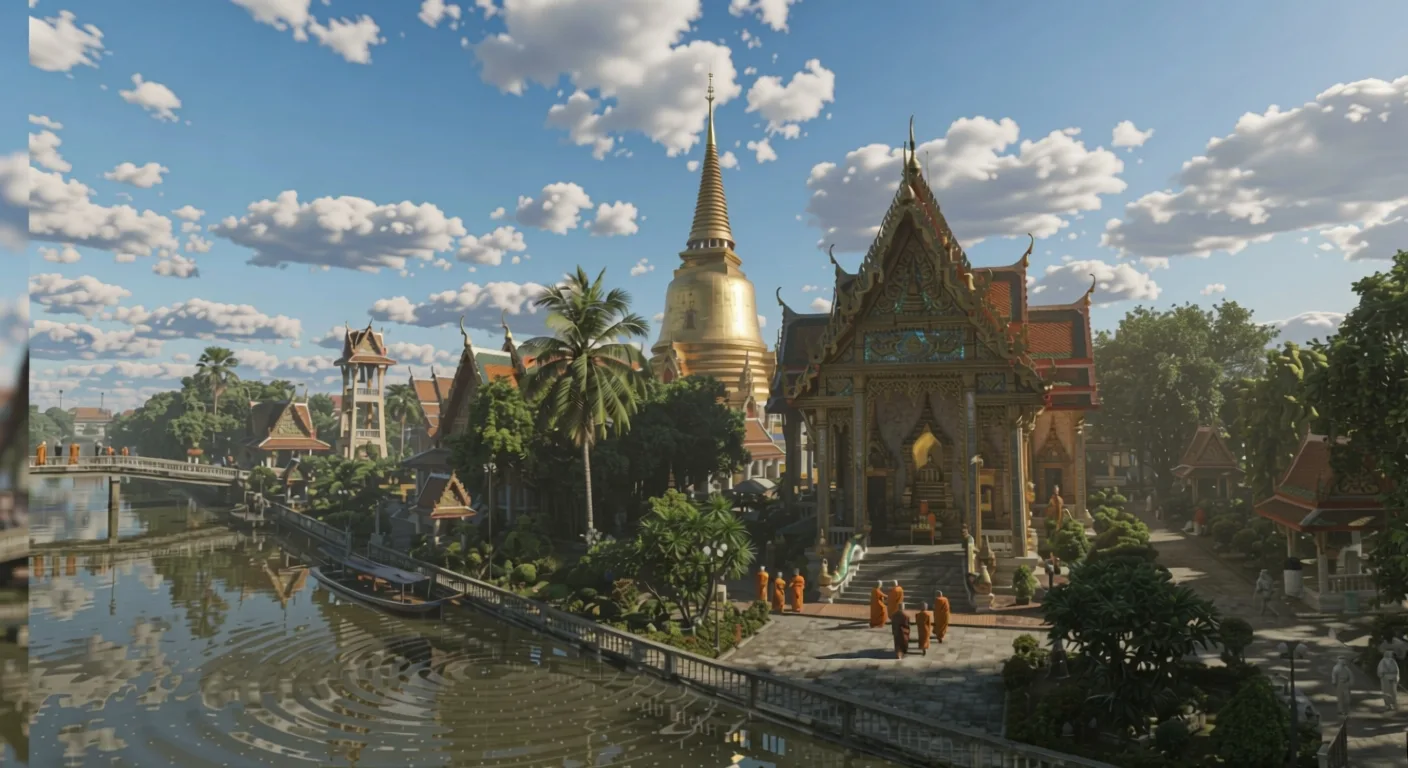
Wat Bang Phra: A Temple of Buddhist Faith, Sak Yant and Luang Pho Poen
Wat Bang Phra (วัดบางพระ) is one of the most renowned Buddhist temples in Nakhon Pathom Province, Thailand. Located in Bang Kaeo Fa Subdistrict, Nakhon Chai Si District, the temple is particularly famous for its association with the revered monk Luang Pho Poen Thitakunno (หลวงพ่อเปิ่น ฐิตคุโณ) and the traditional practice of Sak Yant, or sacred tattooing.
For generations, Wat Bang Phra has served as a centre of Buddhist devotion, merit-making and religious practice. In modern times, it has also become internationally recognised for its traditional Sak Yant lineage, particularly the tiger imagery associated with Luang Pho Poen and the annual Wai Kru ceremony attended by devotees and disciples.
Beyond Sak Yant, Wat Bang Phra contains a number of important religious objects and memorials connected with earlier monks, including Luang Pu Him, Luang Pu Thongyu and Luang Pu Plian. The temple therefore represents a broader tradition of Thai Buddhism, monastic practice and local religious heritage.
The History of Wat Bang Phra
Wat Bang Phra has a long history within the Nakhon Chai Si area. Thailand's Department of Community-Based Tourism records that the temple is traditionally believed to have been established during the Ayutthaya period, approximately in B.E. 2220, corresponding to 1677 CE.
The temple developed with the support of the surrounding community and became an important spiritual centre for local residents. During the period associated with Luang Pu Him Intachoto, the temple undertook significant construction and development, including the building of a new ordination hall in the Nakhon Chai Si river area. The new ubosot was completed in B.E. 2470 (1927).
This long history places Wat Bang Phra within the religious heritage of central Thailand and connects the temple to the cultural development of the Nakhon Chai Si region.
Luang Pho Poen Thitakunno
The modern reputation of Wat Bang Phra is closely associated with Luang Pho Poen Thitakunno, one of Thailand's best-known modern Buddhist monks and a highly respected figure in the country's Sak Yant tradition.
During his tenure as abbot, Luang Pho Poen devoted considerable effort to developing and improving Wat Bang Phra. The temple was expanded and various permanent structures were constructed or renovated during his period of leadership.
His reputation extended well beyond the local community. Devotees came to Wat Bang Phra to pay respects, seek Buddhist guidance and receive blessings. His name eventually became inseparable from the temple and from the sacred tattoo tradition for which Wat Bang Phra is now internationally recognised.
Luang Pho Poen is also remembered through a lifelike statue and memorial area at the temple. His remains are preserved at Wat Bang Phra, where devotees continue to pay their respects.
Luang Pho Poen and the Tradition of Sak Yant
One of the defining features of Wat Bang Phra is its association with Sak Yant, the traditional Thai practice of sacred tattooing.
The term Sak Yant refers broadly to tattooing involving sacred geometric patterns, Buddhist imagery, animals, script and magical or protective inscriptions. Within Thai religious culture, such designs can be connected with Buddhist concepts, local traditions, meditation lineages and forms of spiritual devotion.
At Wat Bang Phra, the practice became particularly associated with Luang Pho Poen and his disciples. His reputation helped establish the temple as one of the best-known destinations for people interested in traditional Thai sacred tattoos.
The practice should be understood within its religious and cultural context rather than simply as decorative tattooing. For many devotees, receiving a Sak Yant is a spiritual experience involving respect for the teacher, religious ceremony and observance of behavioural principles.
The Tiger and Wat Bang Phra
Among the many images associated with Wat Bang Phra, the tiger is perhaps the most recognisable.
Luang Pho Poen became particularly associated with tiger imagery, which can be seen in Sak Yant designs, sculptures, amulets and other sacred objects connected with his tradition.
In traditional Thai belief, the tiger can symbolise strength, courage, authority and protection. The famous Suea Hlang Suea or tiger-back design is among the images commonly associated with the Wat Bang Phra tradition.
It is important to distinguish traditional religious belief from scientifically demonstrated effects. Claims that a particular Sak Yant or amulet provides supernatural protection belong to the devotional and cultural traditions surrounding these objects.
Sak Yant as a Religious Tradition
Traditional Sak Yant is more than the application of ink to the skin. Within its religious setting, the process can involve a teacher, sacred designs, Buddhist or Indic-derived inscriptions, chanting, ritual and blessings.
The relationship between teacher and student is particularly important. The person receiving the tattoo may approach the ritual with respect and devotion, while the practitioner performs the tattoo and associated blessing according to the traditions of the lineage.
Some practitioners and devotees also observe behavioural rules after receiving a particular design. These may include avoiding certain actions or maintaining ethical conduct. Such practices vary according to the teacher and lineage.
Consequently, the meaning of Sak Yant can differ from person to person. For some, it represents faith and spiritual discipline; for others, it is a cultural connection with Thai Buddhist traditions and the heritage of a respected temple.
The Annual Wai Kru Ceremony
One of the most significant events associated with Wat Bang Phra is its annual Wai Kru ceremony.
Wai Kru means paying respect to one's teacher. In the context of Wat Bang Phra, the ceremony provides an opportunity for disciples and devotees to honour their teachers and the spiritual lineage associated with Luang Pho Poen.
The annual ceremony attracts large numbers of participants, including Thai devotees and international visitors. The event has become one of the most recognisable expressions of the temple's Sak Yant tradition.
During the ceremony, participants gather to pay respect to teachers, monks and sacred traditions. The event also demonstrates the importance of the teacher-student relationship within traditional Thai spiritual practices.
In recent years, the ceremony has attracted significant attention internationally, but its underlying purpose remains rooted in respect, remembrance and devotion.
Luang Pho Poen's Legacy at Wat Bang Phra
The legacy of Luang Pho Poen extends beyond Sak Yant.
During his time as abbot, he helped develop Wat Bang Phra into a substantial religious complex. His work included improvements to the temple's buildings and the establishment of permanent structures that contributed to the temple's continued development.
The temple's current community continues this tradition of preservation and development. The present abbot, Luang Pho Sam-ang Paphassaro, has continued the work of maintaining and developing the temple according to the traditions of previous abbots.
Through these successive generations of monks, Wat Bang Phra has remained a living Buddhist institution rather than simply a historical monument.
Sacred Objects and Religious Sites at Wat Bang Phra
Wat Bang Phra contains numerous objects and places that devotees consider important.
These include relics of the Buddha from Sri Lanka, a replica of a Buddha footprint and the temple's principal Buddha images. The newer ordination hall contains Luang Pho To as its principal Buddha image, while the older ordination hall is associated with the image known as Sitthimongkhon.
The temple also preserves statues or memorial representations of several respected monks, including Luang Pu Him, Luang Pu Thongyu and Luang Pu Plian, as well as Luang Pho Poen.
These memorials help visitors understand that Wat Bang Phra's heritage is not limited to a single monk. Instead, the temple represents successive generations of Buddhist teachers whose lives contributed to the religious identity of the community.
Wat Bang Phra and Thai Amulet Culture
Wat Bang Phra is also significant to collectors of Thai Buddhist amulets and sacred objects.
Amulets associated with Luang Pho Poen are particularly well known. Tiger imagery is an important theme, reflecting the visual identity of the monk and the temple's Sak Yant tradition.
Collectors may encounter a variety of amulets, medallions, statues and other sacred objects associated with Luang Pho Poen and Wat Bang Phra. Different editions can vary considerably according to year, material, mould, design, inscriptions, production method and consecration history.
For serious collectors, these differences are important. An amulet should not be identified solely by its general appearance. Examination of the exact edition, temple history, known mould characteristics, material, inscriptions and provenance provides a much more reliable approach.
The Religious Meaning of Wat Bang Phra Amulets
In Thai Buddhist culture, amulets may be regarded as objects of devotion, remembrance and spiritual encouragement.
For devotees of Luang Pho Poen, an amulet may represent a connection with the monk and his teachings. The image of the tiger may additionally carry traditional associations with strength, courage and protection.
These interpretations belong to Thai religious and cultural traditions and should be understood as matters of belief rather than scientifically proven supernatural effects.
The historical significance of such objects, however, can be studied independently through their relationship with the temple, monk, production period, artistic design and documented provenance.
Wat Bang Phra as a Centre of Buddhist Heritage
Although Wat Bang Phra is internationally famous for Sak Yant, it remains first and foremost a Buddhist temple.
Devotees visit to make merit, pray, pay respects to Buddha images and honour respected monks. Religious ceremonies and community activities continue throughout the year.
The temple therefore provides an important example of how traditional Buddhist practice and local community life can coexist with a highly visible spiritual tradition that has attracted international interest.
For visitors, understanding this distinction is important. Wat Bang Phra should not be viewed solely as a destination for obtaining a tattoo. It is an active religious institution with a long history and a living Buddhist community.
Visiting Wat Bang Phra
Wat Bang Phra is located in Bang Kaeo Fa Subdistrict, Nakhon Chai Si District, Nakhon Pathom Province, Thailand.
Visitors should dress respectfully and remember that the temple is an active place of Buddhist worship. Appropriate behaviour is particularly important around monks, Buddha images, memorial areas and during religious ceremonies.
Those interested in Sak Yant should also understand that practices, availability and procedures may change. Anyone considering a traditional tattoo should seek current information directly from the temple or its authorised practitioners before travelling.
Visitors should also follow the instructions of monks and temple staff and show consideration for worshippers during ceremonies.
Wat Bang Phra and International Interest
Wat Bang Phra has become one of the best-known Thai temples among international visitors interested in Buddhism, traditional tattooing and Thai spiritual culture.
The international recognition of Sak Yant has introduced many people to Wat Bang Phra who may otherwise never have encountered the temple. This has helped spread awareness of Luang Pho Poen's legacy and the wider cultural history of Thai sacred tattooing.
At the same time, international interest creates a responsibility for visitors to approach the tradition respectfully. Sak Yant is not simply an exotic tattoo style; within Wat Bang Phra's tradition, it is connected with teachers, religious practice, ritual and cultural heritage.
Why Wat Bang Phra Matters to Thai Buddhist Heritage
Wat Bang Phra is important because it brings together several aspects of Thai religious culture.
It is an old Buddhist temple with roots traditionally associated with the Ayutthaya period. It is also connected with respected monks such as Luang Pho Poen and earlier teachers who contributed to its development.
Its Sak Yant tradition represents an enduring form of Thai sacred art and religious practice. Its annual Wai Kru ceremony demonstrates the importance of respect for teachers and spiritual lineage. Its amulets and sacred objects provide another connection between Thai Buddhism, devotional practice and collecting culture.
Together, these elements make Wat Bang Phra an important subject for anyone studying Thai temples, Buddhist monks, sacred tattoos or Thai amulets.
Conclusion
Wat Bang Phra is one of Thailand's most distinctive Buddhist temples, with a history that extends beyond its modern international reputation for Sak Yant.
The temple's connection with Luang Pho Poen Thitakunno established a lasting spiritual legacy that continues through Buddhist practice, sacred tattooing, amulets and the annual Wai Kru ceremony.
For devotees, Wat Bang Phra remains a place of worship, merit-making and respect for Buddhist teachers. For students of Thai culture, it provides an important example of how religious traditions can be preserved through generations. For collectors, the temple and its associated amulets form an important part of modern Thai Buddhist amulet history.
Above all, Wat Bang Phra represents the enduring relationship between Buddhist faith, teacher lineage, sacred art, community and tradition. Its continued importance demonstrates how a Thai temple can preserve centuries of religious heritage while remaining an active and living centre of devotion.