Introduction
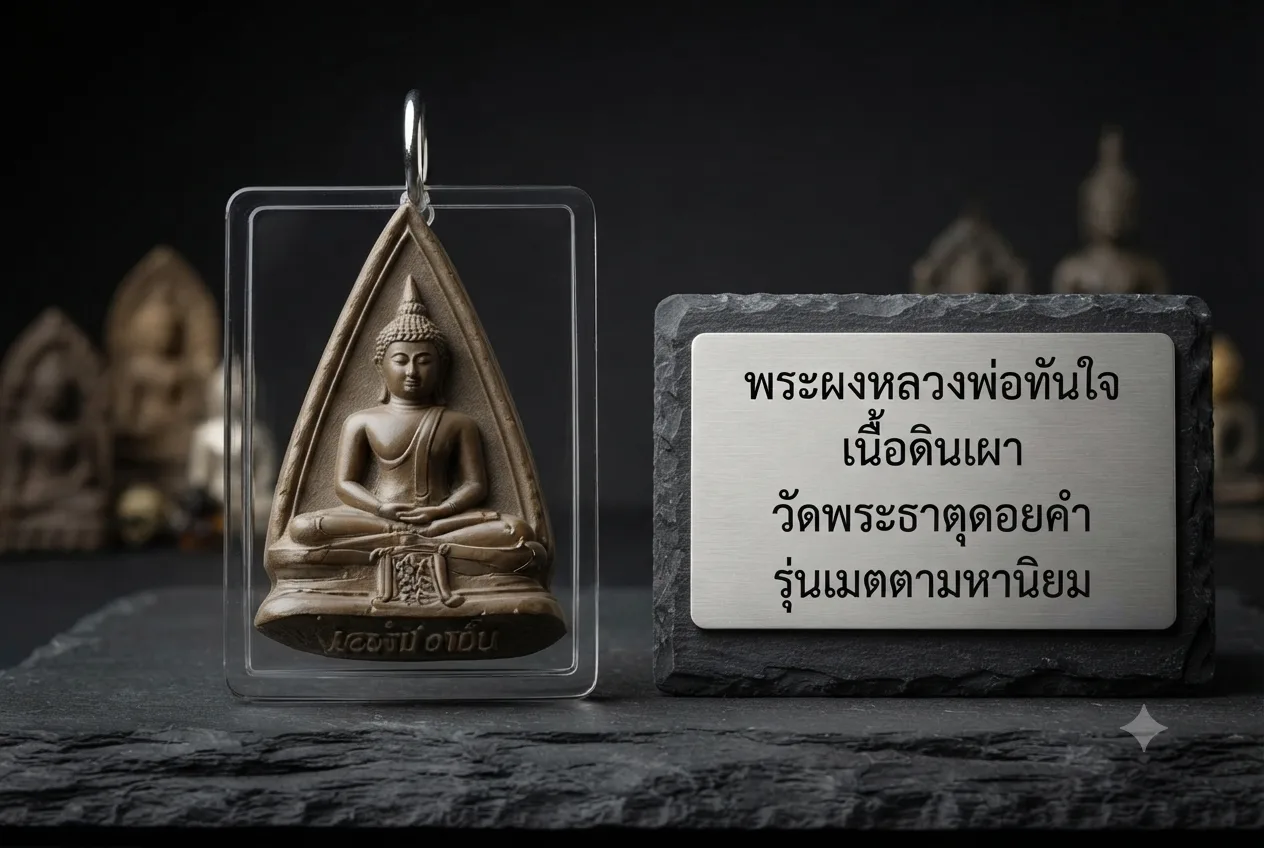
Phra Khun Paen (พระขุนแผน) is one of the most recognizable and culturally fascinating categories of Thai Buddhist amulets.
The distinctive image of Phra Khun Paen is connected with the legendary figure of Khun Phaen, a famous character in Thai literary and cultural tradition. Over time, the name became associated with a broad family of sacred amulets produced by temples and respected monks throughout Thailand.
Phra Khun Paen is especially well known among devotees and collectors for traditional associations with metta maha niyom, charm, confidence, popularity, interpersonal harmony, and success in various endeavours.
However, Phra Khun Paen is much more than an amulet associated with attraction or popularity. Its history connects Thai Buddhism, temple traditions, sacred powders, traditional craftsmanship, folklore, and the continuing practice of amulet collecting.
Explore Famous Thai Buddhist Monks: History, Teachings & Sacred Amulets
What Is Phra Khun Paen?
Phra Khun Paen is a category of Thai amulets traditionally featuring a seated or standing figure, often depicted in a distinctive posture and surrounded by decorative or sacred elements.
The exact appearance varies significantly between temples, monks, periods, and editions.
Some Phra Khun Paen amulets are made from sacred powders or clay-like compounds, while others are produced using metal or other traditional materials.
Because there are many different Phra Khun Paen traditions, the name alone does not identify a particular temple, monk, production year, or value.
The Story of Khun Phaen
The cultural background of Phra Khun Paen is connected with Khun Phaen, one of the central characters in the Thai epic literary work known as Khun Chang Khun Phaen.
Khun Phaen is traditionally portrayed as a skilled warrior, charismatic figure, and practitioner of traditional magical knowledge.
The literary character is associated with qualities such as courage, confidence, charm, strategic ability, and romantic relationships.
It is important to distinguish the literary character from historical Buddhist monks. Khun Phaen belongs primarily to Thai folklore and literature, while Phra Khun Paen amulets became part of Thai Buddhist and sacred-object traditions through temple practices and consecration ceremonies.
Why Is Phra Khun Paen Popular?
Phra Khun Paen became especially popular because of its traditional association with metta maha niyom.
The Thai concept of metta refers broadly to loving-kindness, goodwill, and the ability to inspire harmonious relationships with others.
The term maha niyom is commonly associated with popularity, acceptance, admiration, and favourable social relationships.
As a result, Phra Khun Paen has traditionally attracted devotees who believe that the amulet can support qualities such as:
- Personal confidence.
- Friendliness.
- Charm and social appeal.
- Positive relationships.
- Business connections.
- Negotiation and communication.
- Popularity and goodwill.
These are traditional cultural and religious beliefs rather than scientifically proven effects.
Phra Khun Paen and Metta Maha Niyom
Metta Maha Niyom is one of the most important concepts associated with Phra Khun Paen.
Metta can be understood as loving-kindness or goodwill toward others. In Buddhist teachings, developing metta involves cultivating a mind that wishes for the well-being of others.
In Thai amulet culture, the concept developed a broader traditional meaning associated with being well-liked, approachable, respected, and accepted.
For this reason, Phra Khun Paen has historically been popular among people whose work involves communication and interaction with others.
This can include:
- Business owners.
- Sales professionals.
- Traders.
- Public-facing professionals.
- Entrepreneurs.
- People working in customer service.
Phra Khun Paen and Traditional Thai Buddhism
The development of Phra Khun Paen demonstrates the complex relationship between Buddhist devotion, local folklore, traditional beliefs, and Thai temple culture.
Thai Buddhist amulets can carry several layers of meaning at the same time.
They may represent:
- Devotion to Buddhism.
- Respect for a particular monk.
- Connection with a temple.
- Traditional sacred knowledge.
- Protection and spiritual reassurance.
- Thai cultural heritage.
- Artistic and historical craftsmanship.
Famous Phra Khun Paen Traditions
Phra Khun Paen has been produced by numerous temples and monks throughout Thailand. Different traditions can vary substantially in design, material, age, and collector interest.
Some of the best-known traditions are associated with temples in central Thailand and other regions with long histories of sacred-object production.
Collectors should always identify the exact temple and edition rather than assuming that all Phra Khun Paen amulets belong to the same tradition.
Phra Khun Paen Wat Ban Krang
Wat Ban Krang in Suphan Buri is strongly associated with ancient Phra Khun Paen amulets and occupies an important place in Thai amulet history.
The temple's connection with ancient Khun Paen forms has made it particularly interesting to collectors and students of Thai amulet history.
Older examples associated with Wat Ban Krang are studied for their historical characteristics, materials, forms, and natural aging.
Phra Khun Paen Luang Phor Pahn
Luang Phor Pahn of Wat Bang Nom Kho is another important name for collectors interested in Thai sacred amulets.
Luang Phor Pahn was a respected Buddhist monk known for his religious practice, sacred knowledge, and distinctive amulet traditions.
His amulets include forms that are highly sought after by collectors, making his name an important part of the broader history of Thai amulet culture.
Read more about Luang Phor Pahn of Wat Bang Nom Kho
Phra Khun Paen and Sacred Powders
Many traditional Phra Khun Paen amulets were produced from sacred powder or clay-like compounds.
Depending on the temple and period, materials may have included:
- Sacred temple powders.
- Herbal ingredients.
- Mineral components.
- Incense-related materials.
- Traditional binders.
- Other consecrated substances.
Some editions may also contain sacred inscriptions, small particles, or other traditional materials.
The exact composition varies considerably, so collectors should research the specific edition rather than applying one material description to every Phra Khun Paen.
Phra Khun Paen Design
One of the interesting features of Phra Khun Paen is the diversity of its designs.
Traditional examples may feature:
- A seated or standing figure.
- Decorative frames.
- Sacred inscriptions.
- Multiple figures.
- Temple or architectural motifs.
- Embedded sacred materials.
- Old powder or clay surfaces.
The design can provide important clues about the origin and period of an amulet, although expert authentication requires consideration of many characteristics together.
Traditional Beliefs About Phra Khun Paen
Thai devotees have traditionally associated Phra Khun Paen with a variety of qualities.
These may include:
- Metta – loving-kindness and goodwill.
- Maha Niyom – popularity and acceptance.
- Charm – personal appeal and confidence.
- Business success – favourable relationships and communication.
- Protection – spiritual reassurance.
- Confidence – courage when dealing with challenges.
- Good fortune – traditional beliefs concerning opportunity and prosperity.
These associations are part of Thai religious and cultural traditions and should not be treated as scientifically established guarantees.
Phra Khun Paen and Business
Because of its association with metta maha niyom, Phra Khun Paen has become particularly popular among people whose success depends on communication and relationships.
Traditional devotees may believe that the amulet supports:
- Positive communication.
- Good customer relationships.
- Negotiation.
- Confidence.
- Friendship.
- Professional networking.
- Positive social interactions.
The deeper meaning of metta, however, is not simply obtaining something from another person. In Buddhist practice, loving-kindness is connected with genuine goodwill and compassion toward others.
Phra Khun Paen for Collectors
Phra Khun Paen is a fascinating collecting category because there are many different historical and modern traditions.
Collectors often examine:
- Temple origin.
- Monk or master associated with the amulet.
- Production period.
- Known mold or form.
- Material composition.
- Sacred inscriptions.
- Surface characteristics.
- Natural aging.
- Condition.
- Provenance.
The most important principle for beginners is to identify the exact edition before attempting to determine rarity or value.
Authenticity of Phra Khun Paen
Because popular Phra Khun Paen amulets can attract significant collector interest, reproductions and imitations exist.
Authenticating a Phra Khun Paen requires knowledge of the specific temple, period, mold, material, production method, and recognized characteristics.
Collectors should consider:
- Whether the temple attribution is correct.
- Whether the claimed production period is plausible.
- Whether the material matches known examples.
- Whether the surface shows appropriate aging.
- Whether the design matches recognized forms.
- Whether reliable provenance exists.
- Whether the piece has been examined by a knowledgeable specialist.
A certificate can be useful, but it should not be considered the sole proof of authenticity.
How Beginners Can Start Collecting Phra Khun Paen
For someone new to Thai amulet collecting, it is better to study one specific tradition thoroughly than to attempt to identify every Phra Khun Paen at once.
- Choose a particular monk or temple.
- Study its historical background.
- Learn the recognized molds and forms.
- Study genuine reference examples.
- Compare different pieces.
- Learn about traditional materials.
- Understand the difference between old and modern editions.
- Research market prices carefully.
- Seek specialist advice before purchasing expensive examples.
Phra Khun Paen Compared With Other Thai Amulets
Phra Khun Paen is only one part of Thailand's extensive Buddhist amulet tradition.
Other important categories include:
- Phra Somdej – The "King of Thai Amulets"
- Phra Pidta – History, Meaning & the Famous Thai Amulet
- Luang Pu Tuad Amulets
- Kuman Thong
- Takrut
Famous Thai Monks and Phra Khun Paen
The story of Thai amulets is closely connected with generations of respected monks.
Collectors interested in Phra Khun Paen may also wish to explore:
Phra Khun Paen and Thai Cultural Heritage
Phra Khun Paen demonstrates how Thai religious culture can incorporate elements of literature, folklore, Buddhist devotion, traditional craftsmanship, and local temple traditions.
The legendary Khun Phaen from Thai literature has become a cultural symbol, while Phra Khun Paen amulets have developed their own identity within Thai Buddhist amulet culture.
This combination makes Phra Khun Paen especially interesting for anyone studying Thai history and culture.
Frequently Asked Questions About Phra Khun Paen
What is Phra Khun Paen?
Phra Khun Paen is a category of Thai Buddhist amulets associated with the legendary Thai literary character Khun Phaen and with numerous temples and monks throughout Thailand.
What does Phra Khun Paen symbolize?
Phra Khun Paen is traditionally associated with metta maha niyom, goodwill, popularity, charm, confidence, harmonious relationships, and traditional forms of spiritual protection.
Who was Khun Phaen?
Khun Phaen is a famous character from the Thai literary epic Khun Chang Khun Phaen. He is traditionally portrayed as a skilled warrior and charismatic figure with knowledge of traditional arts and magical practices.
Is Phra Khun Paen a Buddhist amulet?
Yes. Phra Khun Paen is an important category within Thai Buddhist amulet culture. Different versions have been produced and consecrated by numerous temples and Buddhist masters.
Does Phra Khun Paen bring love or attraction?
Traditional Thai beliefs associate some Phra Khun Paen amulets with metta maha niyom, charm, popularity, and harmonious relationships. These are cultural and devotional beliefs rather than scientifically established effects.
Which Phra Khun Paen is the most famous?
There are numerous respected traditions, and popularity varies among collectors. Ancient Phra Khun Paen associated with Wat Ban Krang and various later temple and monk traditions are among the categories studied by collectors.
Are Phra Khun Paen amulets valuable?
Some historical and authenticated examples can be valuable. Price depends on the specific temple, monk, edition, age, rarity, condition, authenticity, provenance, and collector demand.
How can I authenticate a Phra Khun Paen?
Authentication requires examination of the specific temple and edition, including its mold, materials, production characteristics, natural aging, and provenance. Expensive examples should be examined by knowledgeable and reputable specialists.
Conclusion
Phra Khun Paen occupies a unique position within Thailand's rich Buddhist amulet tradition.
Its connection with the legendary Khun Phaen, the concept of metta maha niyom, traditional sacred practices, and generations of Thai monks has made it one of the country's most recognizable amulet categories.
For devotees, Phra Khun Paen may serve as a reminder of goodwill, confidence, compassion, and positive relationships. For collectors, it offers a fascinating window into Thai literature, folklore, Buddhist culture, temple traditions, and traditional craftsmanship.
Whether appreciated from a spiritual, historical, artistic, or cultural perspective, Phra Khun Paen remains an important part of Thailand's enduring amulet heritage.